Dog Park Safety & Dog Behavior
Learn how to recognize healthy play, early stress signals, and moments when a dog needs more space.
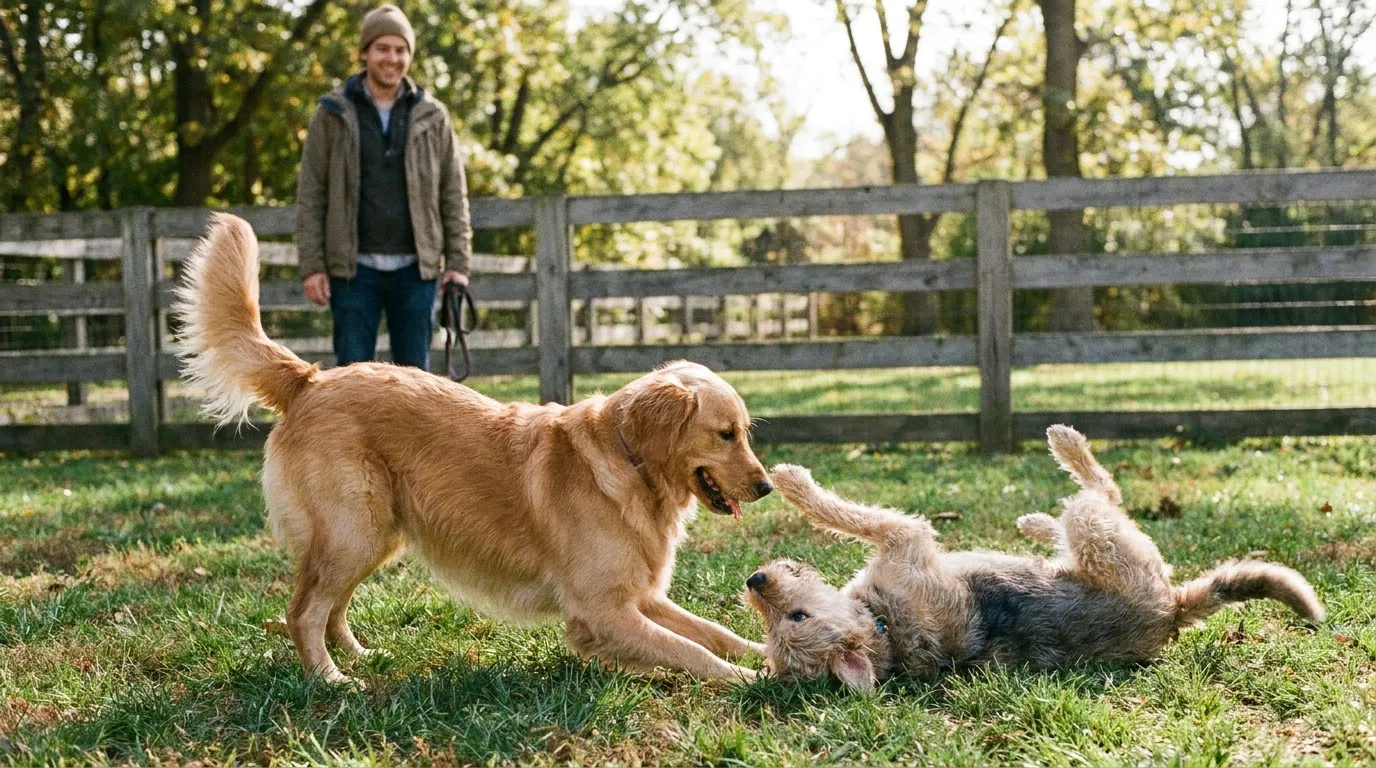
READ THE SIGNALS
Use body language to guide your decisions.
Green Light
Loose movement, play bows, role reversals, and easy disengagement.
Yellow Light
Repeated mounting, stiff movement, one-sided chasing, or no breaks.
Red Light
Hard staring, cornering, panic, snapping, or inability to disengage.
HEALTHY PLAY
Safe play is flexible, not relentless.
Dogs should be able to pause, move away, switch roles, and choose to re-engage. One dog repeatedly trying to escape or hide is not balanced play.
- Look for play bows and curved approaches.
- Watch whether both dogs choose to continue.
- Create a short break if energy keeps rising.
Quick Tip
If the environment or your dog feels wrong today, skipping the park is a smart choice.
Safety First
Early, calm intervention is usually better than waiting for play to escalate.
CONFLICT PREVENTION
Interrupt early and calmly.
You do not need to wait for growling or a fight before stepping in. A simple recall, movement break, or exit can prevent escalation.
- Avoid grabbing collars in the middle of a dog fight unless necessary for immediate safety.
- Do not punish warning signals such as growling; create distance instead.
- Leave if your dog cannot settle after a break.
Quick Tip
If the environment or your dog feels wrong today, skipping the park is a smart choice.
Safety First
Early, calm intervention is usually better than waiting for play to escalate.
Behavior and health often overlap.
If play leads to injury or your dog seems unwell afterward, review the health and emergency guide.