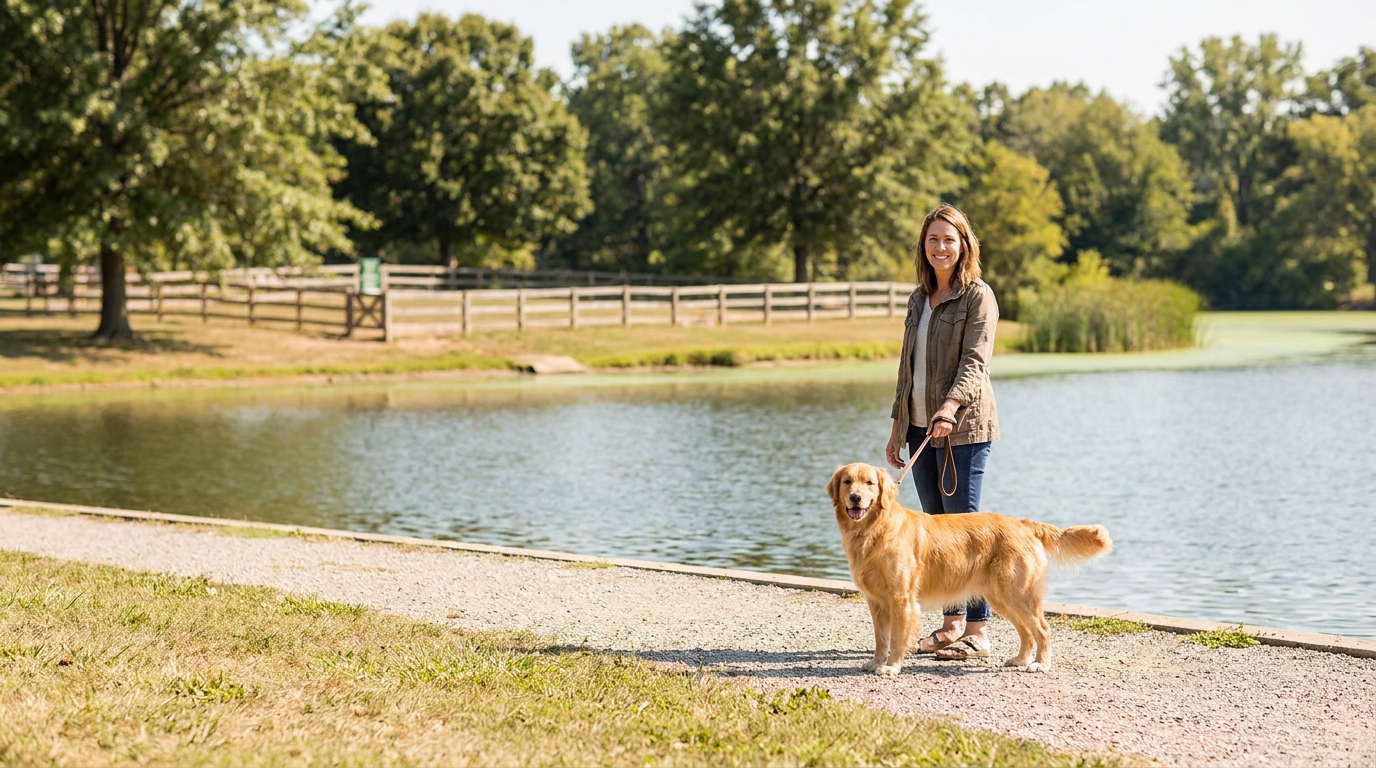
A dog park with a pond, lake, creek, or splash area can look like the perfect place to cool off, especially during warm weather. But water that appears inviting can sometimes contain harmful cyanobacteria, commonly called blue-green algae. In late August 2026, a Washington public health district warned people to avoid shoreline water around Crescent Bar after a dog that had spent time in the area later developed signs consistent with cyanotoxin poisoning and died. That kind of incident is why water safety deserves a place on every dog owner’s dog park checklist.
Harmful algal blooms are not limited to one state or one kind of waterway. They can occur in lakes, ponds, slow-moving rivers, reservoirs, and other warm, nutrient-rich water. Dogs may be exposed when they swim, drink contaminated water, retrieve a toy, walk through shoreline scum, or lick water and residue from their coat afterward. Because symptoms can develop quickly, prevention is far safer than trying to judge whether a suspicious-looking pond is safe.
This guide explains what dog owners should know before visiting a park with water, which warning signs deserve attention, and what to do if you think your dog may have been exposed. For a broader pre-visit routine, also review the Dog Park Safety Guide and the Dog Park Health & Emergency Guide.
Why Blue-Green Algae Is a Dog Park Safety Issue in 2026
Warm-weather recreation and off-leash play often overlap with the conditions in which harmful blooms can develop. That makes late summer and early fall an important time for owners to pay attention to local water advisories, posted park notices, and changing pond conditions. A familiar park is not automatically a safe park every day. Water quality can change, and a place your dog used safely before may be under an advisory later.
What Harmful Algal Blooms Are
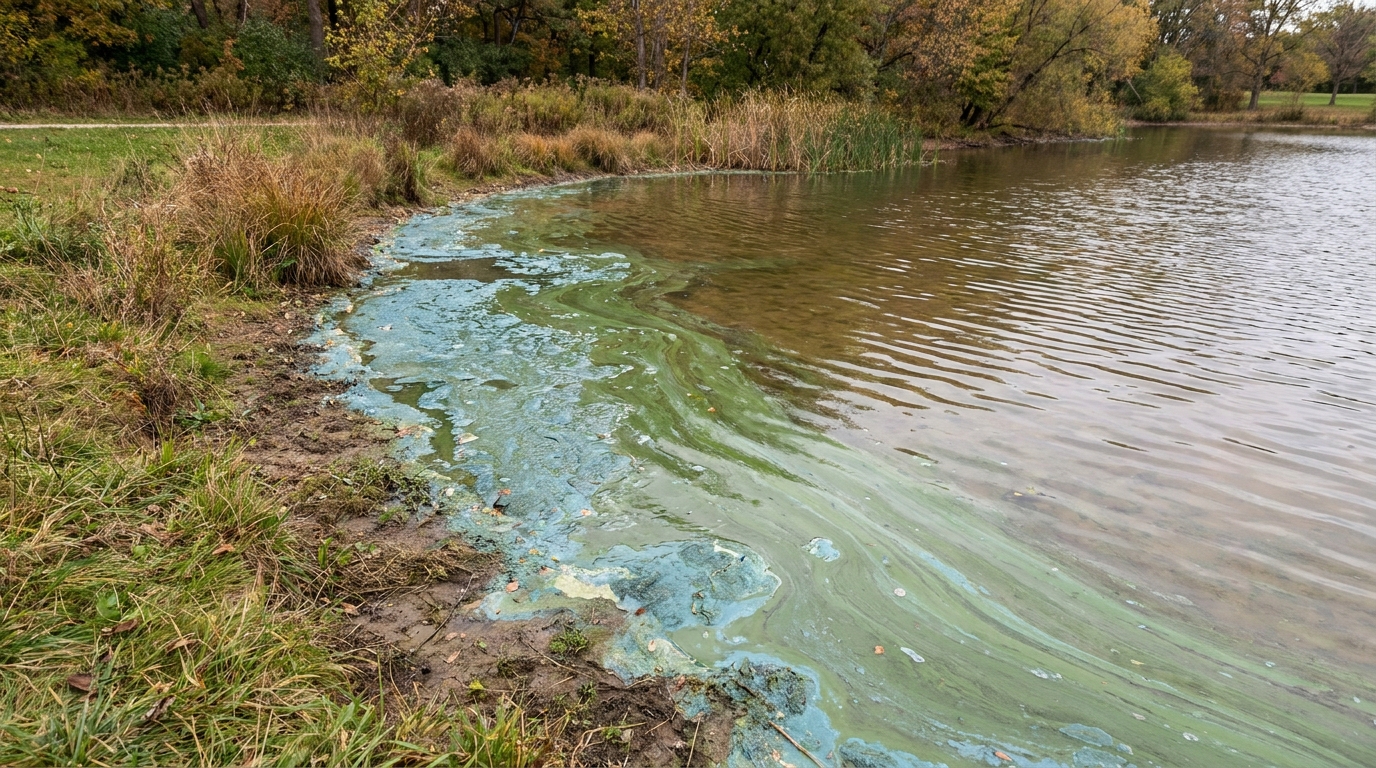
Despite the common name, blue-green algae are cyanobacteria. Some cyanobacteria can produce toxins that affect the liver, nervous system, skin, or gastrointestinal tract. Not every bloom is toxic, and not every patch of discolored water contains dangerous toxin levels. The problem for dog owners is that visual inspection alone cannot reliably tell you whether toxins are present.
Blooms may make water look green, blue-green, brown, red, cloudy, streaky, foamy, or like paint or pea soup. Scum can collect near shorelines where dogs are most likely to drink or wade. Wind can also move surface material into concentrated patches. Even when the main body of water looks relatively clear, shoreline accumulation may still be a concern.
Why Dogs Can Face Greater Exposure
Dogs interact with water differently than people. They may gulp water while swimming, bite at splashes, retrieve floating toys, or drink directly from ponds and lakes. After leaving the water, many dogs lick their legs, paws, chest, and coat. That creates another route for swallowing residue that may be on the fur. A dog does not have to intentionally drink a bowlful of contaminated water to be exposed.
Why Clear-Looking Water Is Not Proof of Safety
One of the most important rules is simple: do not use appearance as your only test. Some harmful blooms are obvious, but toxin-producing cyanobacteria are not always easy to identify by sight. If local officials have posted a warning, if the water has an unusual color or surface film, or if you are uncertain about current conditions, skip the swim.
The American Animal Hospital Association explains that blue-green algae can be dangerous or fatal to pets and advises owners to understand exposure routes and poisoning signs. For additional veterinary guidance, see the AAHA guide to blue-green algae and dogs.
How Dogs Are Exposed at Parks and Trails
Some dog parks include water features or sit beside ponds, lakes, rivers, beaches, or drainage areas, so water safety can matter even when swimming is not the main reason for visiting.
Before unclipping the leash, scan the entire area. Look for posted warnings, temporary barriers, unusual water color, dead fish, surface scum, or areas where water is stagnant. Check the park website or local health department if water quality is a recurring concern in your area. If you are evaluating a new park, the Find a Dog Park section can help you think beyond location and consider safety features, shade, water access, fencing, and layout.
Common Exposure Routes to Watch For
- Drinking: Dogs may drink directly from a pond, lake, puddle, or slow-moving shoreline water.
- Swimming: Water can enter the mouth while a dog paddles, retrieves a toy, or plays with another dog.
- Coat contamination: Residue can remain on fur and later be swallowed during grooming.
- Shoreline contact: Dogs may walk through concentrated scum or investigate material washed onto the bank.
- Shared toys: A ball or fetch toy thrown into questionable water can bring contaminated water back to the dog.
When in doubt, redirect your dog to dry-land activity. A missed swim is a minor inconvenience compared with a potential toxin exposure. Bringing your own fresh water also reduces the temptation to let a thirsty dog drink from natural water sources. Our Dog Park Etiquette guide also covers responsible shared-space habits, including staying attentive instead of assuming the park environment is automatically safe.
What Dog Owners Should Do Before, During, and After a Visit
The best response to harmful algae is prevention. You do not need to become a water-quality expert. You need a repeatable routine that helps you notice warnings, control access to questionable water, and respond quickly when something seems wrong.
Build a Simple Water-Safety Routine
Before leaving home, check whether the dog park contains a pond, creek, lake access point, splash feature, or seasonal drainage area. During warm months, look for current advisories from the park agency, local public health department, or environmental authority. If an advisory is active, choose a different park rather than assuming one part of the shoreline is safe.
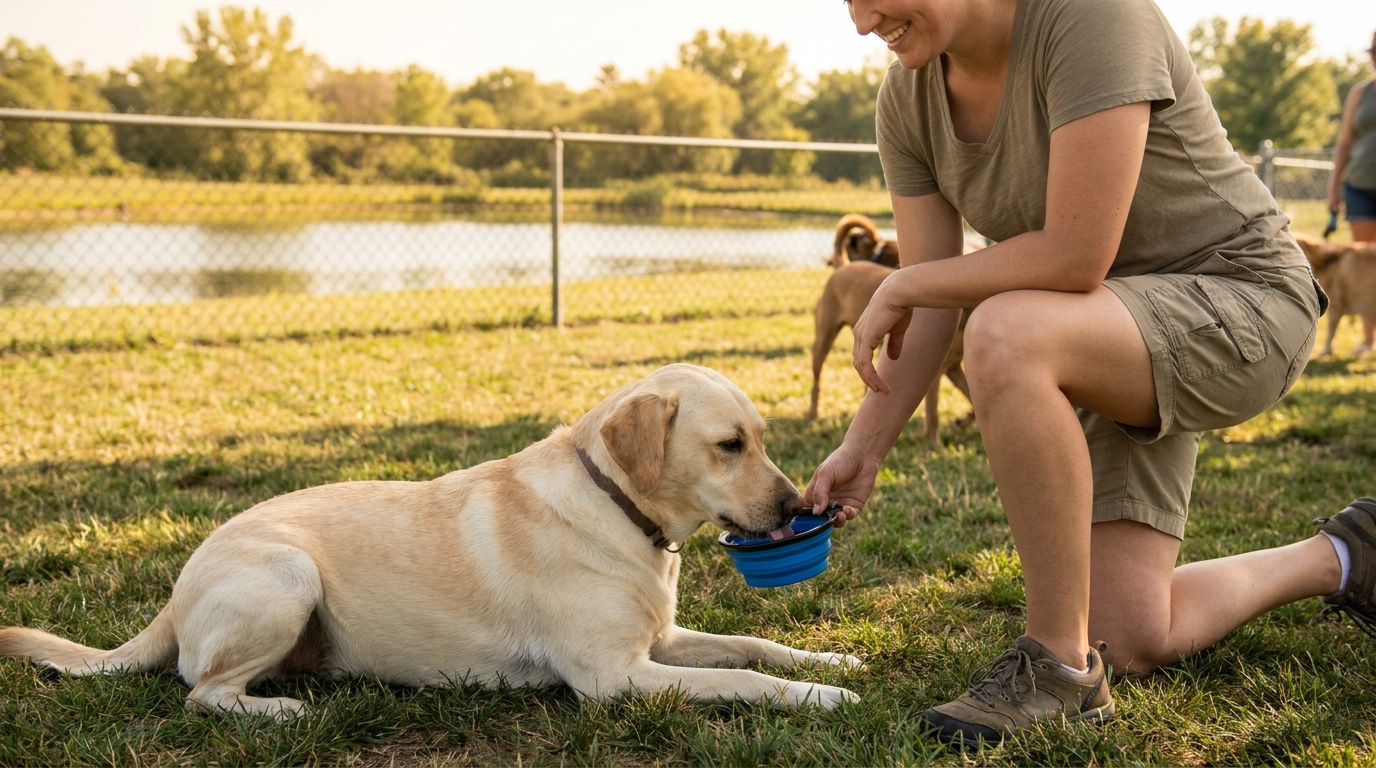
Bring fresh drinking water and a clean portable bowl. This is useful even at parks with fountains because it gives you control over your dog’s water source. Keep your dog leashed while you inspect a new area, especially when water is immediately accessible from the entrance. If you see suspicious scum or discoloration, do not let your dog investigate it.
During play, watch for repeated trips to the water. High-energy dogs can become thirsty quickly and may drink without hesitation. Heat also increases the importance of hydration, but hydration should come from a known clean source. If the weather itself is becoming unsafe, end the visit rather than relying on a pond to cool your dog. The Health & Emergency Guide includes additional preparation for heat, injury, and other dog park concerns.
If your dog enters questionable water before you can stop them, move away from the source and prevent additional licking or drinking. If exposure is suspected, contact a veterinarian or emergency veterinary service promptly for individualized instructions. Do not wait for severe symptoms before asking for help.
When Symptoms Mean an Emergency
Possible cyanotoxin exposure can become serious quickly. Signs may include vomiting, diarrhea, excessive drooling, weakness, difficulty breathing, confusion, tremors, seizures, collapse, or other sudden changes after contact with suspicious water. Different toxins can cause different patterns, so there is no single symptom that rules exposure in or out.
If your dog becomes ill after swimming in or drinking from water that may contain a harmful bloom, treat the situation as urgent. Tell the veterinary team where the dog was, when the exposure may have occurred, whether the dog drank or swam, and what symptoms you have observed. If there are posted warnings at the location, mention them. Fast, accurate information helps the veterinary team assess the risk.
Do not return to the water to investigate, collect algae, or allow another pet to enter. Report a suspected harmful bloom or animal illness to the appropriate local park or public health authority so other visitors can be warned if necessary.
Water can make a dog park more enjoyable, but access does not guarantee safety. Check advisories, bring fresh drinking water, avoid suspicious blooms and shoreline scum, and be willing to change plans when conditions look questionable.
For your next outing, combine water awareness with a full pre-entry check using the Dog Park Safety Guide, learn how to recognize stress and unsafe interactions in our Dog Park Safety & Behavior Guide, and use the dog park directory to evaluate parks based on more than proximity alone.