Warm, sunny days make dog parks look inviting, but heat can turn a fun outing into a dangerous one faster than many owners expect. Dogs do not cool themselves the way people do, and the combination of direct sun, humidity, intense play, hot surfaces, and limited shade can quickly create conditions that lead to overheating. At the same time, blacktop, concrete, artificial turf, and even sand can become hot enough to injure paw pads during a short walk from the parking area to the play zone.
Dog park heat safety matters because problems often build gradually, then become serious very quickly. A dog may arrive excited and full of energy, run hard for a few minutes, and seem fine right up until the point they are suddenly struggling. Owners who know what to check before entering the park, how to pace activity, and when to leave are in a much better position to prevent heat-related emergencies.
This guide explains how dogs overheat, which dogs need the most caution, how hot surfaces can damage paws, and what practical steps you can take before, during, and after a summer dog park visit. For broader planning, also review the Dog Park Safety Guide, the Dog Park Health & Emergency Guide, and our post on blue-green algae and dog park water safety.
Why Heat Safety Matters at the Dog Park
Heat risk at a dog park is not only about the outside air temperature. Dogs can overheat when the weather is hot, when humidity is high, when the sun is intense, or when exercise is too strenuous for the conditions. A dog park adds several risk factors at once: excitement, running, social stimulation, and owners who may not realize how much heat their dog is building while playing.
Why Dogs Overheat Faster Than Owners Expect
Dogs primarily cool themselves through panting, not through sweating over most of the body the way humans do. That means they are less efficient at shedding heat, especially during exercise. When a dog is running, wrestling, chasing, and repeatedly accelerating, their body temperature can rise fast. Add strong sun or sticky humidity, and cooling becomes even harder.
Cornell University’s College of Veterinary Medicine notes that overheating can lead to heatstroke, a life-threatening emergency caused by a marked elevation in body temperature after prolonged exposure to hot or humid weather or strenuous exercise. Cornell also explains that all dogs are susceptible, even though some are more vulnerable than others.
Heat and Humidity Matter More Than Owners Realize
Many owners focus only on the thermometer, but humidity is a big part of the problem. Panting works by moving air and moisture, so when the air is already humid, cooling becomes less efficient. A temperature that feels manageable to you may still be too stressful for a dog that is running hard, especially in direct afternoon sun.
This is one reason early morning and later evening are usually better choices for active outdoor time. Cornell recommends limiting activity to cooler times of day and being especially careful during the hottest part of the afternoon. If you are deciding whether to head to the park at all, ask yourself not only how hot it is, but how humid, exposed, and physically demanding the outing will be.
Hot Ground Can Injure Paw Pads
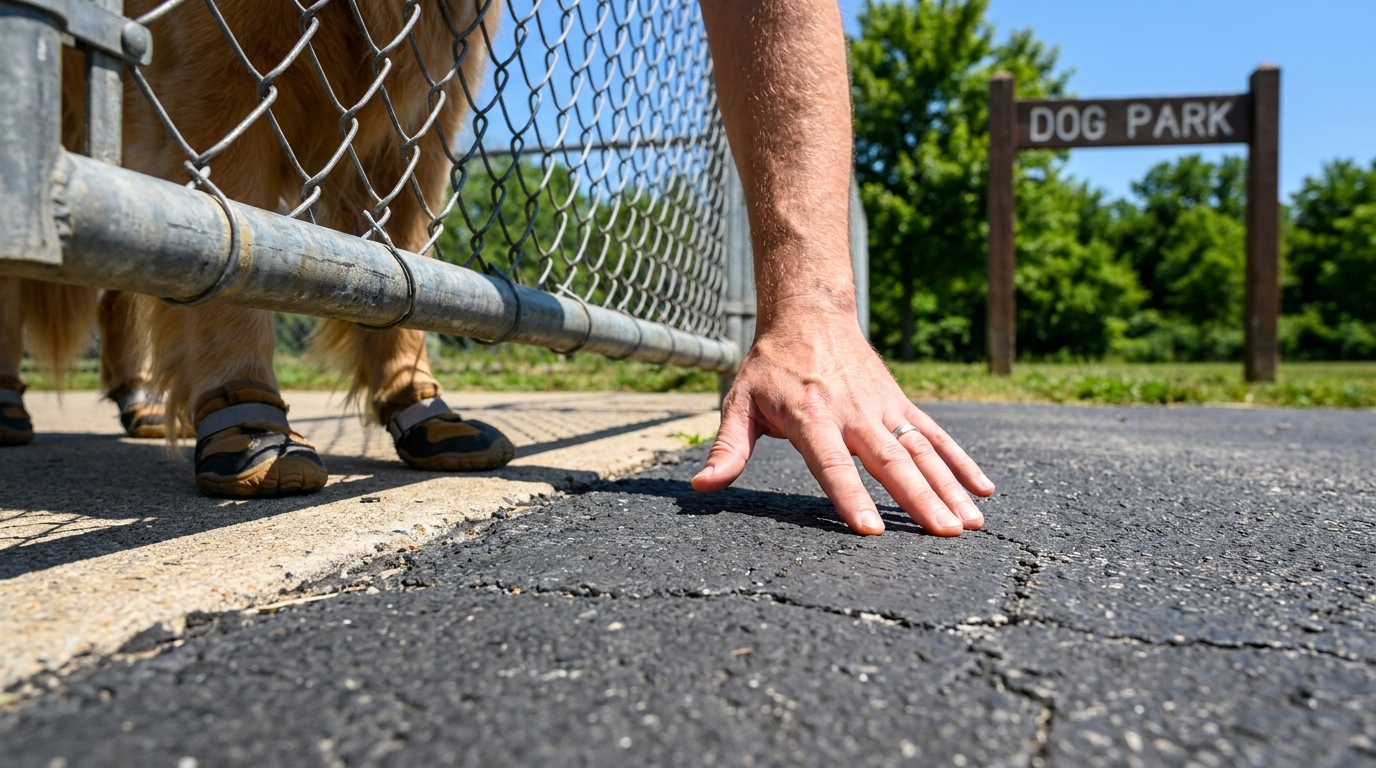
Heat safety is not just about internal body temperature. Ground surfaces can create a second problem at the same time. Pavement, concrete, blacktop, artificial turf, and sand can retain and radiate heat, sometimes becoming much hotter than the surrounding air. A dog standing, walking, or sprinting across those surfaces may develop painful burns on the paw pads.
Cornell advises using caution on hot asphalt and pavement and suggests a simple rule: if you cannot comfortably keep your own hand on the surface or stand barefoot on it for about 10 seconds, it is likely too hot for your dog. That quick check is not perfect, but it is a practical reminder that ground temperature and air temperature are not the same thing.
Which Dogs Need Extra Caution in Warm Weather
Every dog can be affected by heat, but some dogs need a lower threshold for caution. Cornell highlights brachycephalic breeds such as Pugs, Bulldogs, Boston Terriers, and Boxers as higher-risk because they cannot pant as efficiently. Overweight dogs, senior dogs, dogs with heart or breathing conditions, and dogs with thick or dark coats also deserve extra care.
Even if your dog is young and athletic, personality and play style still matter. A dog that becomes overstimulated, ignores thirst, or keeps running long after they should rest can get into trouble more quickly than a calmer dog. High-drive retrievers, herding breeds, and social dogs that do not self-regulate well may need more owner intervention, not less.
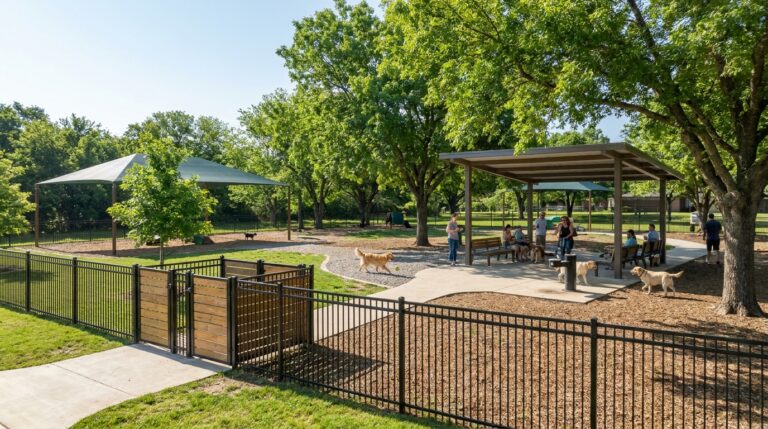
Owners should also consider the park layout. A large open park with little shade, few rest areas, and a long walk from the parking lot may not be a smart choice during hot weather, even if your dog normally loves it. Choosing a smaller shaded park or skipping the visit entirely can be the better call.
How to Prevent Heatstroke and Burned Paws
The best heat safety strategy is a routine that starts before you leave home. Prevention is far easier than dealing with a heat emergency once your dog is already struggling. A little planning can dramatically reduce risk.
A Simple Dog Park Heat Safety Plan
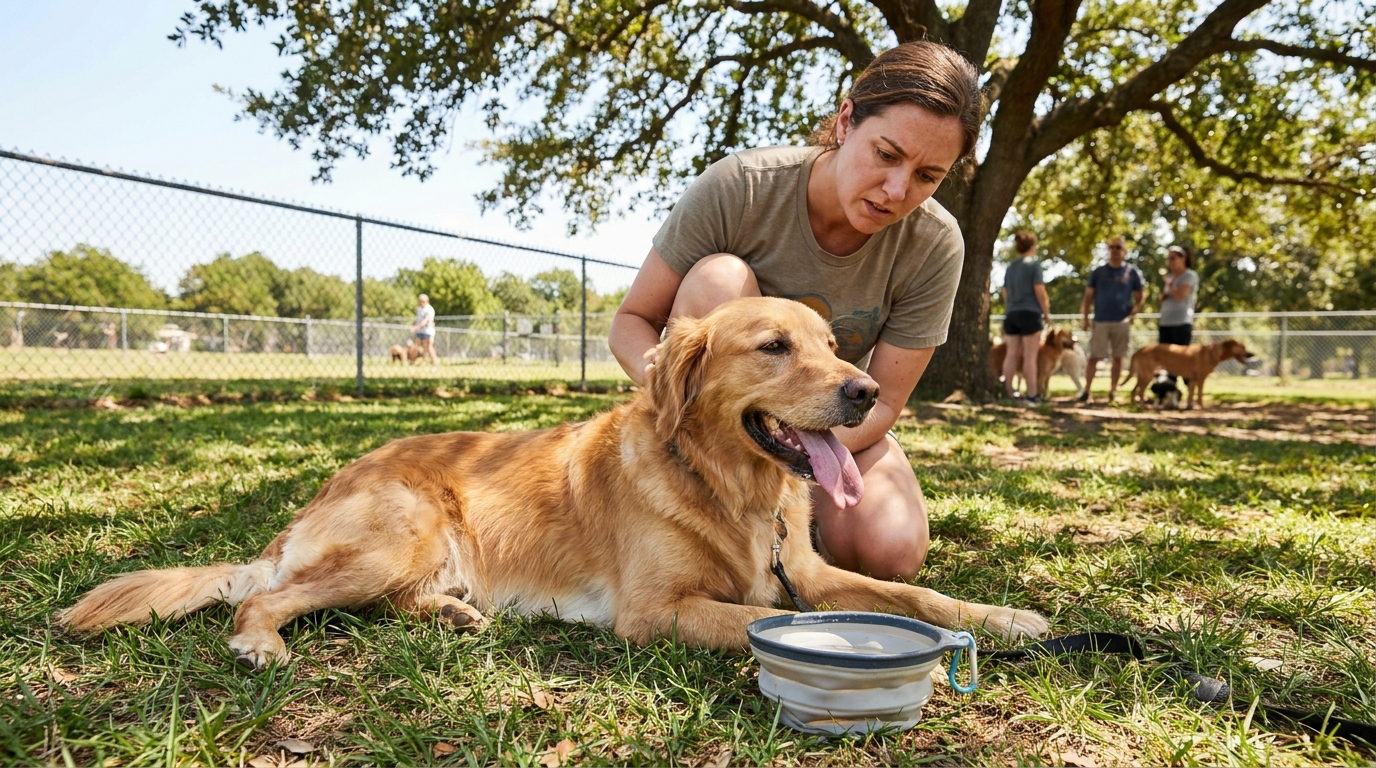
Start by choosing the right time. Early morning is usually best. Late evening can also work, depending on how much heat the day has stored in the ground. Midday and late afternoon are often the riskiest windows because sun exposure is high and surfaces may already be hot. If the weather feels borderline, do not talk yourself into it just because your dog likes the park.
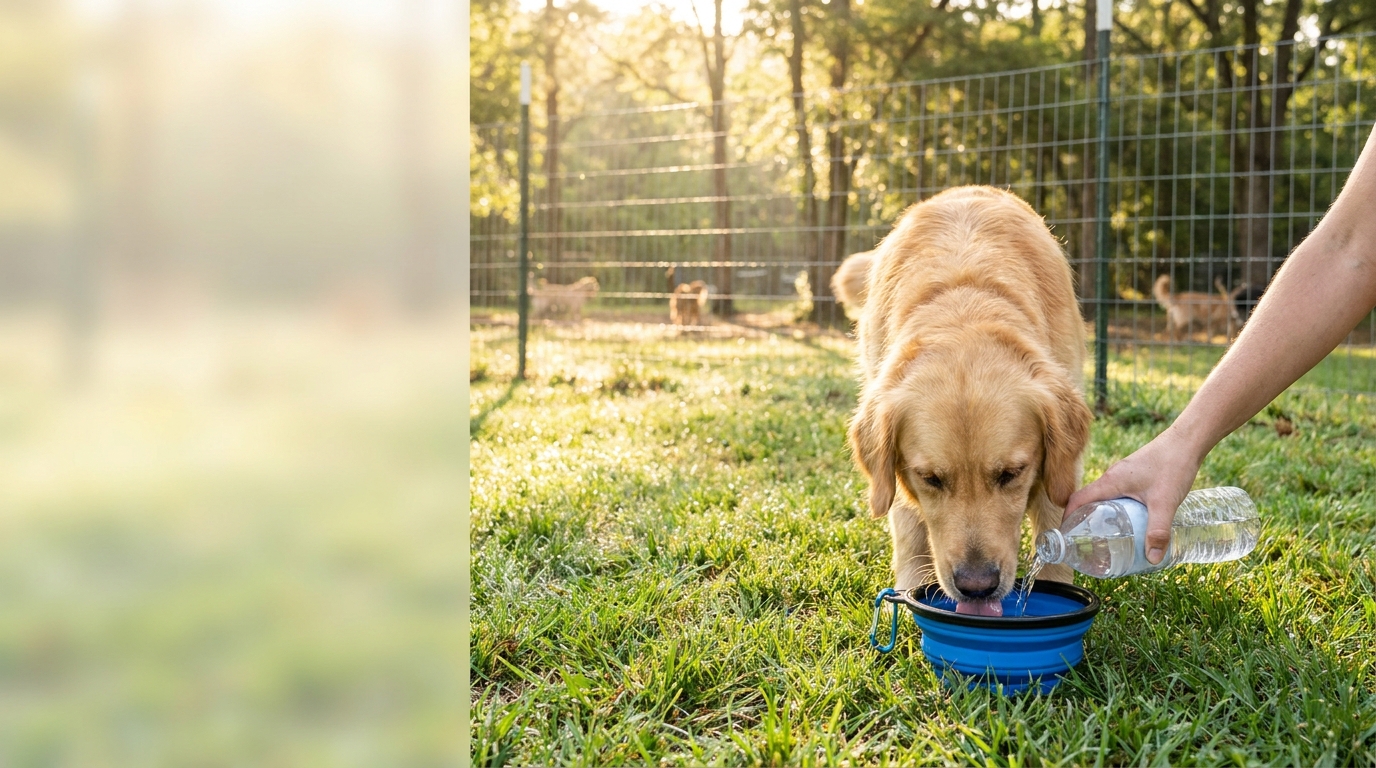
Bring fresh water and a portable bowl. Do not rely only on shared bowls or fountains. Give your dog water breaks before they seem desperate for one. Offer short rest periods in shade and do not let a highly excited dog play nonstop. A few minutes of sprinting may be enough on a hot day. The goal is to control the pace rather than waiting for your dog to self-limit.
Check the surfaces before entering. Walk the route from the car, test blacktop or concrete, and notice whether your dog will need to cross hot areas multiple times. If the park surface is artificial turf or mostly exposed dirt and sand with little shade, think carefully about whether the setting matches the conditions.
ASPCA guidance
ASPCA guidance also emphasizes providing plenty of fresh water, avoiding over-exercise, keeping pets indoors when it is extremely hot, and being especially careful with flat-faced breeds, older dogs, overweight dogs, and pets with heart or lung disease. For additional authority information, you can link to the Cornell summer heat safety tips for dogs.
During the visit, watch your dog more closely than usual. Active supervision is not only for behavior issues. Heat problems often show up first in body language: a dog hanging near the exit, seeking shade, slowing down, panting harder, or looking less coordinated. If your dog seems even slightly off, end the outing. Leaving early is the smart move, not the disappointing one.
After the visit, continue watching your dog while driving home and once you are back indoors. Some dogs show the real extent of the problem only after activity stops. Give them a chance to cool down in a shaded or air-conditioned environment, provide water, and check paw pads for redness, tenderness, limping, or reluctance to walk.
Early Signs of Overheating You Should Not Ignore
Heat issues can begin with subtle signs. Cornell lists heavy panting, seeking shade, whining, reluctance to play, and drooling as early warning signs that a dog is overheating. ASPCA similarly notes excessive panting, difficulty breathing, increased heart and respiratory rate, drooling, weakness, stupor, collapse, seizures, vomiting, and bloody diarrhea as serious warning signs.
If your dog shows mild early signs, move them immediately to a cooler space with water and rest. Cornell advises bringing the dog into cool air conditioning, wetting them with cool water, and placing them in front of a fan. If your dog continues to pant heavily, appears weak or confused, has trouble breathing, vomits, collapses, or develops seizures, go to a veterinary hospital immediately. Heatstroke is a medical emergency, not something to “watch for a while” at home.
When to Skip the Dog Park Entirely
Some days the right answer is simply not going. Skip the dog park when temperatures are extreme, humidity is high, the park has little shade, the ground is too hot to touch safely, or your dog falls into a higher-risk group. Also skip the visit if your dog recently had stomach upset, is recovering from illness, is already tired, or tends to overdo exercise in stimulating environments.
Choosing another form of activity does not mean your dog loses out. A short shaded sniff walk, indoor enrichment, training games, puzzle feeders, or a calm backyard play session can be much safer than forcing a summer dog park outing. Good dog ownership is about matching the activity to the conditions, not sticking to the plan no matter what.
Dog park heat safety comes down to judgment, preparation, and willingness to leave early. Watch the weather, test the ground, bring fresh water, pace activity, use shade, and know your dog’s personal limits. Combine that with what you learn in our Dog Park Safety & Behavior Guide, Dog Park Etiquette, and Health & Emergency Guide, and you will be in a much stronger position to make warm-weather park visits safer for your dog.