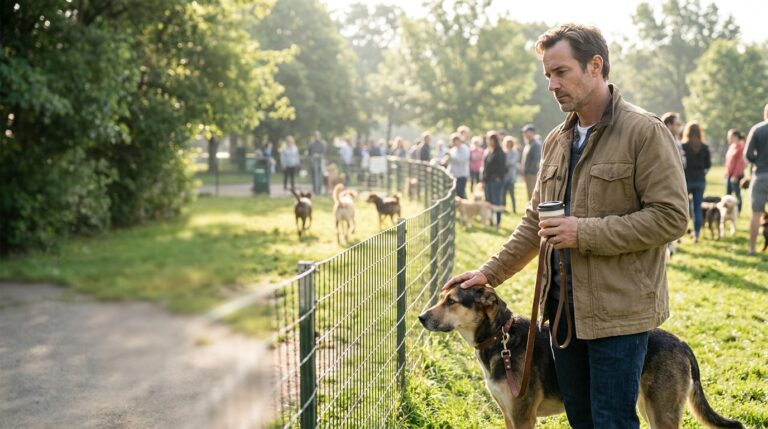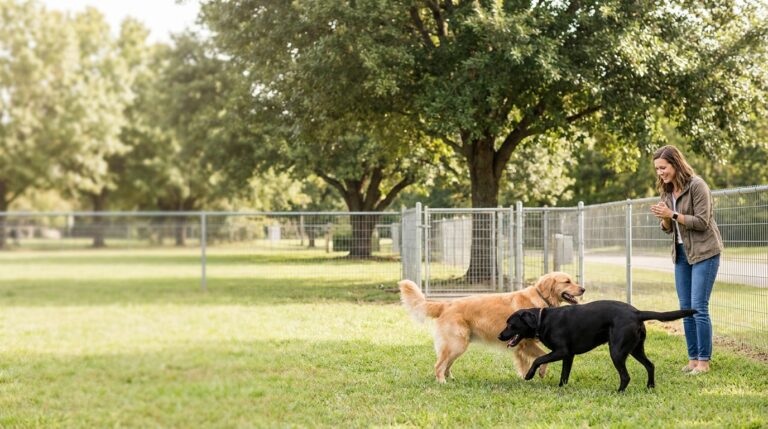
Not every fenced patch of grass is an equally good dog park. The way a park is designed can influence how easily owners enter and exit, whether dogs of very different sizes are mixed together, how quickly crowded areas develop, whether people can supervise clearly, and how comfortable dogs remain during hot or wet weather.
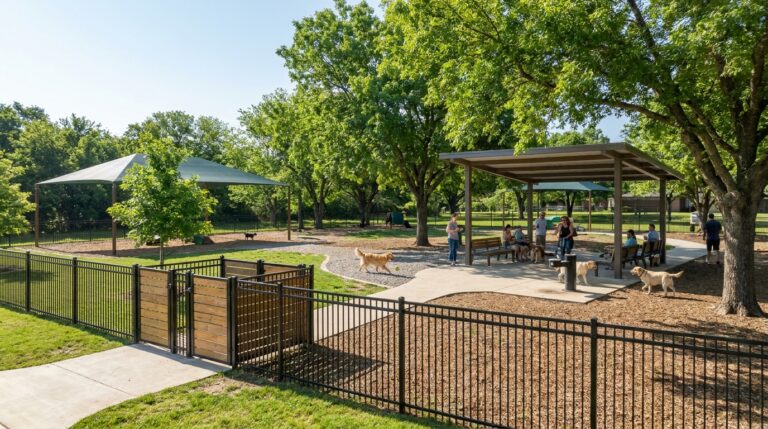
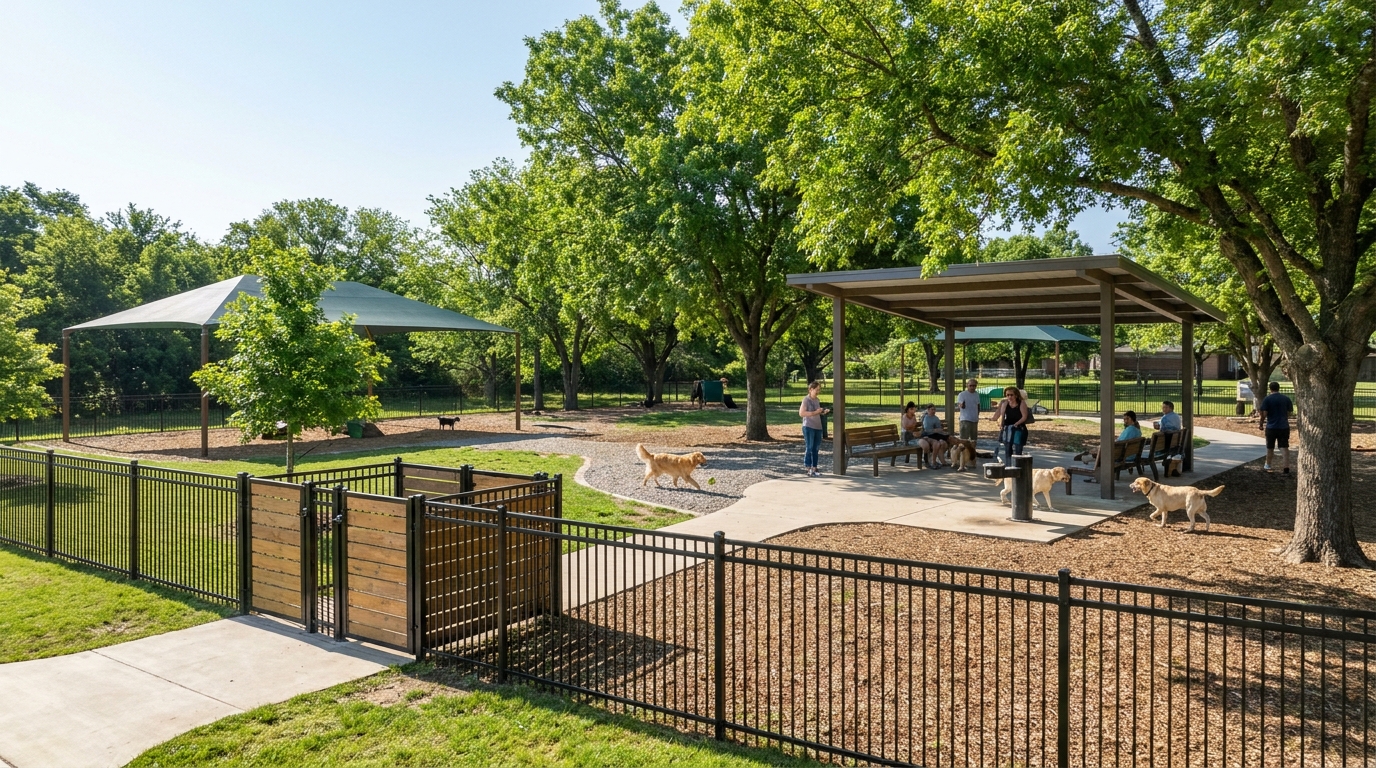
In 2026, communities are continuing to rethink dog park design. New and renovated parks increasingly feature double-gated entrances, separate areas for different dog sizes or play styles, shade structures, drinking fountains, accessible paths, improved drainage, durable surfacing, waste stations, and more thoughtful seating. These upgrades are not simply decorative. Many address practical problems dog owners encounter every day.
A well-designed dog park cannot guarantee that every interaction will be safe. Owner supervision, dog behavior, health, training, and crowd conditions still matter. But good infrastructure can make it easier for owners to manage dogs responsibly and avoid preventable problems.
Before choosing a new off-leash area, use this guide alongside our Find a Dog Park resource and Dog Park Safety Guide to evaluate more than just how close a park is to your home.
Why Dog Park Design Features Matter More Than They Seem
Dog parks are unusual public spaces because multiple unfamiliar animals are allowed to move freely in the same enclosed area. Owners may be entering, leaving, filling water bowls, throwing toys, sitting on benches, or talking while dogs are running at full speed around them.
Small design decisions can therefore have a large practical impact. A narrow single gate can become crowded when several dogs rush toward a newcomer. A park with no shade may become uncomfortable during summer. Poor drainage can create persistent mud or standing water. One large undivided enclosure can put tiny dogs beside much larger dogs with completely different play styles.
Modern park design increasingly treats these issues as part of the planning process rather than afterthoughts. For example, the City of Redmond’s 2026 permanent dog park plan includes separate areas for small or anxious dogs and large or social dogs, a double-gated universal-access entry system, permanent shade structures, accessible hard-surface paths, drinking facilities, and waste stations. You can review the city’s current project information through the City of Redmond dog park project page.
Entry, Fencing, and Separation Should Be the First Things You Check
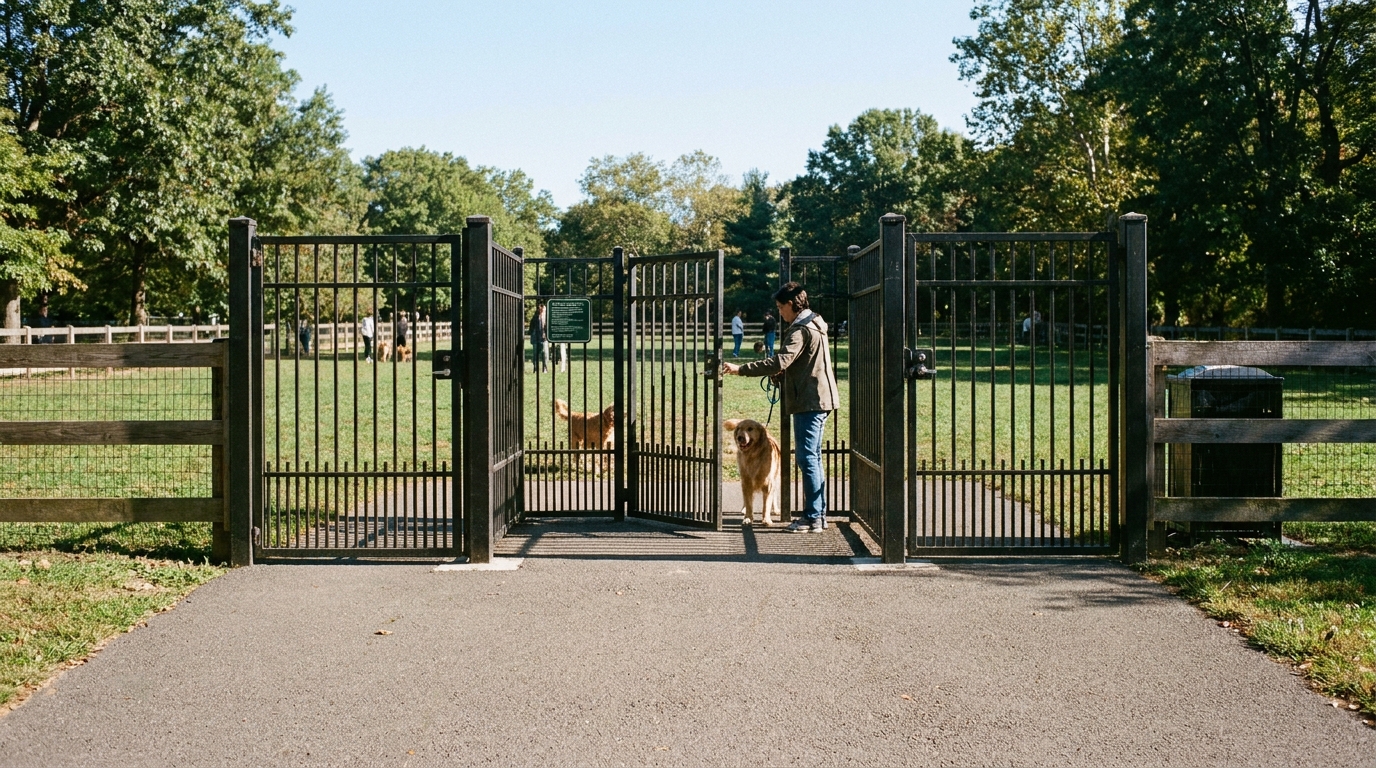
When visiting a dog park for the first time, do not begin by looking at agility equipment or how large the grass field is. Start at the perimeter. The fence and entrance system are what separate off-leash dogs from parking lots, roads, pedestrians, cyclists, wildlife, and other nearby activity.
Walk along enough of the fence to see whether it appears secure. Look for gaps below the fence, damaged sections, loose gates, sharp edges, or places where an athletic dog might climb or jump over. Pay particular attention to areas where erosion has created space underneath the fence.
Double-Gated Entrances Create a Useful Safety Buffer
A double-gated entrance uses two gates with a small enclosed space between them. Ideally, an owner enters the first gate, closes it completely, manages the leash inside the transition area, and only then opens the second gate into the park.
This arrangement reduces the chance that a loose dog inside the park can run directly through an open exterior gate. It also gives owners a transition space where they can attach or remove a leash without standing directly in the main play area.
Gate design alone does not prevent escapes. Owners still need to close each gate carefully and avoid holding both gates open at once. The transition area can also become stressful if multiple people and dogs crowd into it simultaneously, so responsible dog park etiquette remains important.
When you arrive, watch the gate before entering. If several excited dogs are clustered around the interior entrance, wait outside until owners move them away. Entering directly into a group of highly aroused dogs can create unnecessary tension for a newcomer.
Separate Dog Areas Can Improve Play Matching
Many newer dog parks divide the property into separate zones. The most common arrangement is a small-dog area and a general or large-dog area, although some parks are experimenting with areas intended for quieter, anxious, senior, or lower-energy dogs.
Size separation is not a perfect behavioral system. Two dogs of similar weight can still have incompatible play styles, while some larger and smaller dogs may interact appropriately. Still, separating dramatically different body sizes can reduce certain risks associated with accidental collisions and rough physical play.
Owners should follow the posted rules for each zone rather than choosing an area simply because it is less crowded. If your dog consistently overwhelms other dogs, separation by size does not solve the behavioral problem. Review our Dog Park Safety & Dog Behavior Guide to learn what balanced, reciprocal play should look like.
Visibility between areas matters too. Open sightlines allow owners to locate their dogs quickly and notice developing tension. Dense landscaping, large structures, blind corners, or poorly positioned equipment can make active supervision harder.
Comfort, Accessibility, and Maintenance Are Safety Features Too
Some important dog park features do not look like safety infrastructure at first. Shade, drinking water, seating, pathways, drainage, and surface materials can strongly influence how people and dogs use the park.
Owners stay more attentive when they can comfortably move around the park. Dogs may regulate activity better when shade and resting areas are available. Accessible pathways also make off-leash spaces usable by a broader range of people, including owners who use mobility devices or have difficulty navigating deep mud, loose gravel, or uneven terrain.
Shade, Water, and Safe Surfaces Matter in Every Season
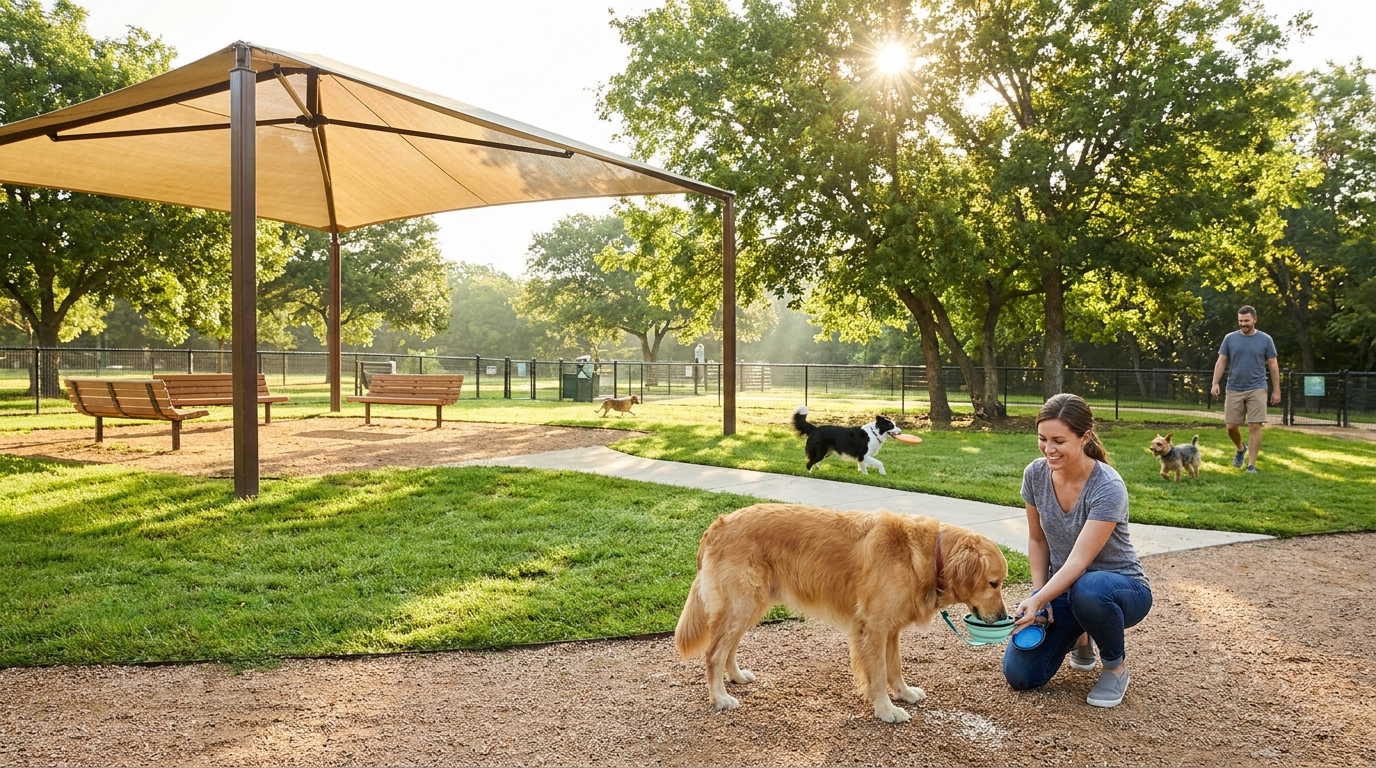
Shade becomes particularly important during warm weather. Large mature trees, shade sails, shelters, and covered seating can give dogs and owners a place to move away from direct sun. However, owners should never treat shade as permission to keep a dog outside indefinitely in dangerous heat. Use our Dog Park Heat Safety guide to determine when it may be smarter to skip the park entirely.
Reliable drinking water is another useful feature. Ideally, parks provide maintained potable water sources positioned where dogs do not have to crowd tightly together. Even when a fountain is available, bringing your own clean bowl can reduce reliance on communal containers. Our guide to shared dog park water bowls explains why.
Surface choice also deserves attention. Natural grass can be comfortable but may become muddy or worn under heavy use. Artificial turf can provide consistent coverage but may become very hot in direct sunlight. Gravel and decomposed granite may drain well but can vary in comfort depending on particle size and maintenance. Concrete or asphalt paths improve accessibility but can heat quickly in summer.
No single surface is ideal in every climate. The important question is whether the material is maintained, drains effectively, provides secure footing, and remains appropriate for current weather conditions.
How Owners Can Evaluate a Dog Park Before Unclipping the Leash
You do not need architectural expertise to recognize a thoughtfully maintained dog park. Most of the important features can be assessed during a short walk around the entrance before your dog goes inside.
If possible, visit a new park once without your dog. This lets you watch normal traffic patterns, inspect the fence and gate system, locate shaded areas and water, and observe how owners manage their dogs without simultaneously handling your own pet.
Pay attention to how crowded the park becomes at different times. A beautifully designed park may still be a poor choice if it is consistently packed with dogs whose owners are not supervising them. Conversely, a relatively simple park can work well when it has secure infrastructure, enough space, responsible users, and good maintenance.
Use a 60-Second Dog Park Safety Scan
When you arrive with your dog, stay outside the gate for at least a short observation period. Start with the physical environment, then evaluate the dogs already inside.
- Fence: Does the perimeter appear secure, intact, and appropriate for the dogs using the area?
- Gate: Is there a double-gated entry or another controlled transition system?
- Zones: Are separate areas available when needed for smaller or quieter dogs?
- Visibility: Can owners easily see dogs throughout the main play area?
- Shade: Are there places where dogs can rest away from direct sun?
- Water: Is clean drinking water available, or did you bring your own?
- Ground: Is the surface excessively hot, muddy, slippery, damaged, or covered with standing water?
- Crowding: Are dogs clustered around entrances, water stations, or narrow spaces?
- Supervision: Are owners actively watching their dogs?
If multiple concerns appear at the same time, choose another park or return later. The goal of a dog park visit is not simply getting inside. It is giving your dog a reasonable environment for safe, enjoyable activity.
Cleanliness, Drainage, and Maintenance Reveal a Lot About a Park
Maintenance may be one of the easiest ways to judge how seriously a dog park is managed. Look for working gates, intact fences, emptied trash receptacles, stocked waste-bag stations, functioning water equipment, and surfaces that are not badly eroded.
Drainage is especially important after rain. Persistent puddles create muddy congestion and may encourage dogs to drink from standing water. Poorly drained areas can also damage turf and create slippery surfaces. If a park regularly becomes unusable after moderate rainfall, its underlying design or maintenance may not match the amount of traffic it receives.
Waste disposal matters as well. Owners should always pick up after their dogs, but parks also need enough bins and stations to make responsible disposal practical. Excessive unattended waste is not only unpleasant; it can indicate poor user behavior or inadequate maintenance.
Accessible entrances
Finally, look at how the park handles human movement. Accessible entrances, stable paths, thoughtfully positioned benches, and clear circulation areas help owners move around rather than remaining clustered near a gate. Owners who move with their dogs are often better positioned to notice changing interactions.
A safer dog park is not defined by expensive agility equipment, colorful signs, or how impressive it looks in photographs. Start with secure fencing, controlled entry, appropriate separation, good visibility, shade, reliable water, usable surfaces, drainage, waste management, and enough space for dogs to move without constant crowding.
Then evaluate the factor no designer can control: the dogs and owners using the park that day. Even the best-designed facility requires active supervision and good judgment.
Before your next visit, use the SafeDogParks directory to compare locations, review our Dog Park Safety Guide before entering, and remember that leaving—or deciding not to enter—is always an acceptable choice when a park does not feel right for your dog.