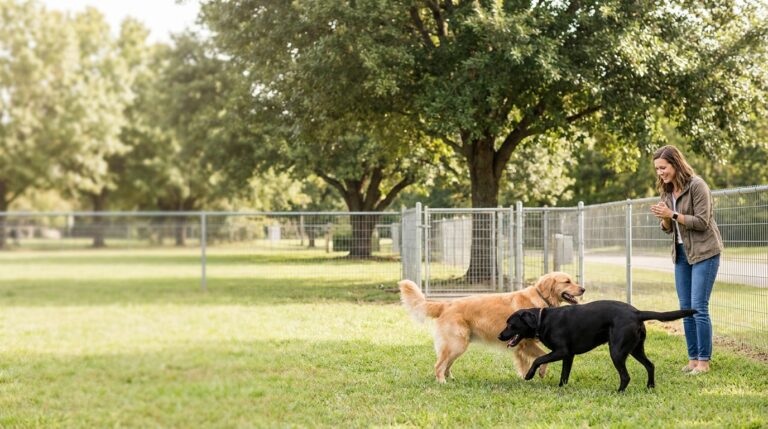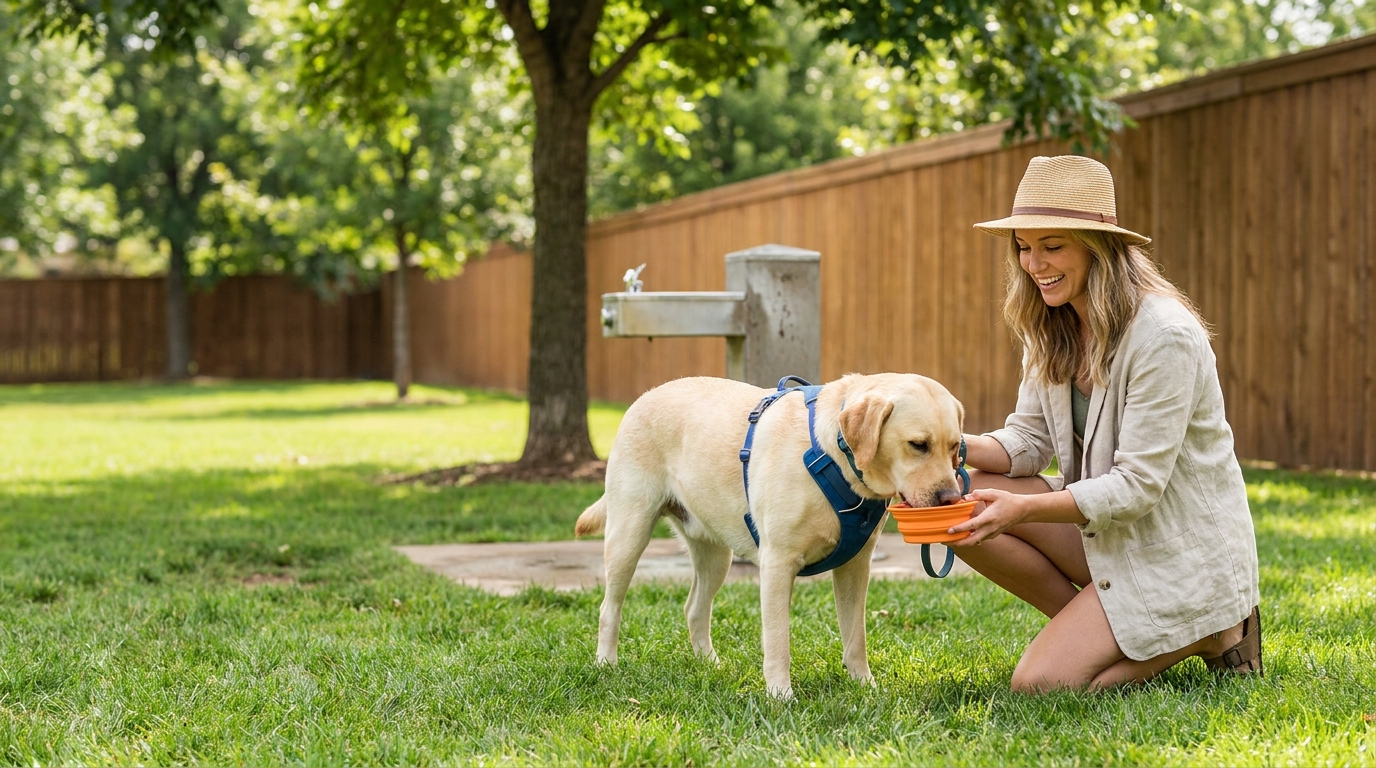
A water bowl sitting beside a dog park fountain may seem like a convenient way to keep dogs hydrated, especially after running, chasing, and wrestling with other dogs. Hydration is essential, but the fact that water is available does not automatically mean the bowl is the best drinking option for your dog.
Communal water bowls can be used by dozens of unfamiliar dogs in a single day. Dogs may leave saliva behind, step into the bowl with dirty paws, splash contaminated water onto the rim, or introduce fecal material picked up from the ground. Outdoor bowls can also collect dirt, insects, leaves, wildlife contamination, and stagnant water between cleanings.
That does not mean a dog will become sick every time they drink from a public bowl. The concern is about reducing unnecessary exposure when there is an easy alternative: bringing fresh water and your dog’s own clean bowl or bottle.
This guide explains how communal dog park water bowls can become contaminated, which dogs may need extra caution, what owners should check before allowing a dog to drink, and how to build safer hydration habits. For additional preparation, see the Dog Park Safety Guide and our dog park heat safety guide.
Why Communal Water Bowls Can Be a Health Risk
Public dog parks are very different from a home where two healthy, familiar pets drink from a bowl that is regularly cleaned. At a busy off-leash park, you usually do not know which dogs have used a bowl, how recently the water was changed, whether the container was sanitized, or what may have entered it during the day.
The American Kennel Club notes that communal water bowls can potentially expose dogs to bacteria, viruses, and parasites. Contamination may come from saliva, fecal material, dirty paws, standing water, rodents, or other environmental sources. For that reason, having a separate source of fresh drinking water for your dog is generally the safer choice.
How a Shared Bowl Becomes Contaminated
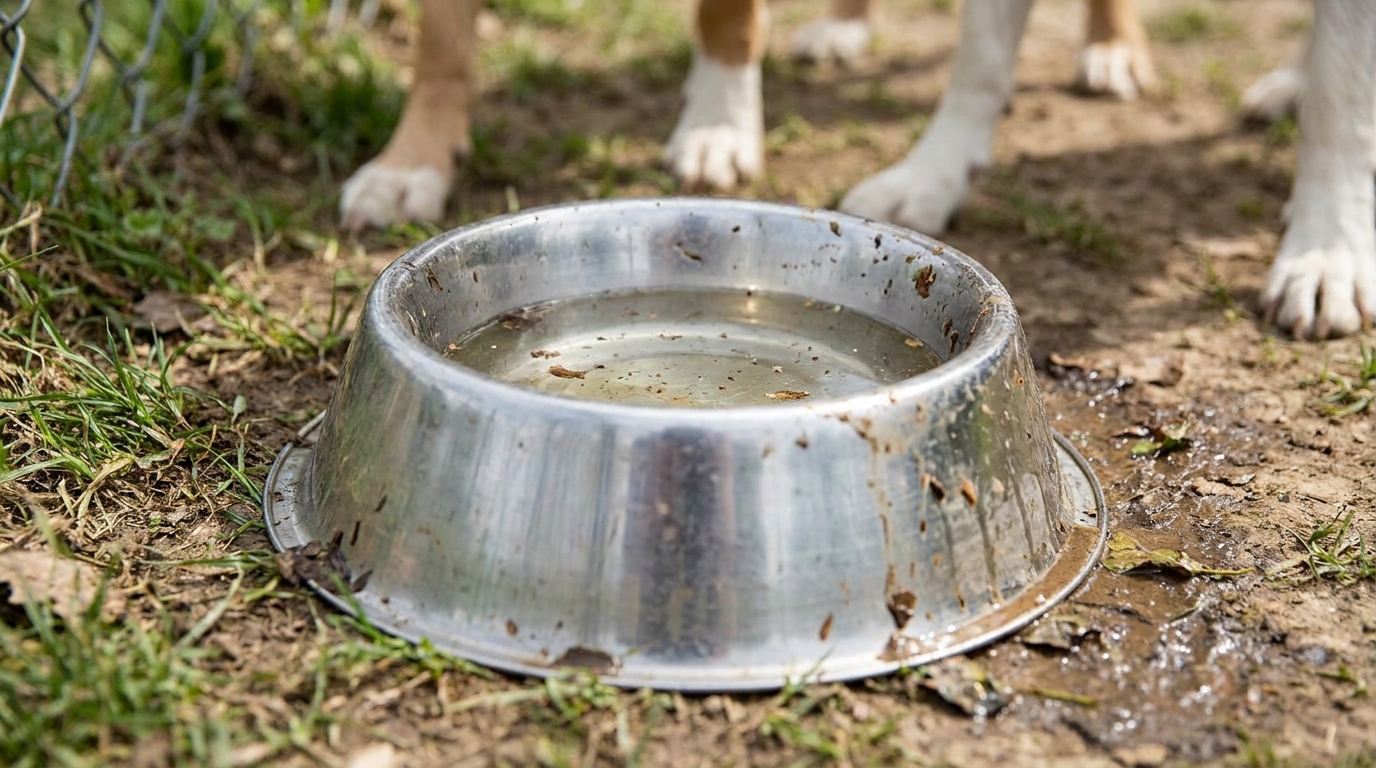
Imagine what happens around a busy dog park water station. One dog drinks and leaves saliva on the rim. Another puts a paw into the bowl after walking across grass or soil where dogs have defecated. A third splashes water onto the ground and then drinks again. Between visitors, leaves, dust, insects, or wildlife may reach the bowl.
If fresh water continuously flows through a fountain and the area is regularly cleaned, the situation may be better than a bowl of stagnant water that sits outside for hours. However, owners usually cannot verify the cleaning schedule or know exactly what has contacted the bowl.
Dog parks also create plenty of opportunities for direct dog-to-dog exposure, so avoiding a shared bowl cannot eliminate every infectious-disease risk. It simply removes one avoidable pathway. Safe dog park decisions are usually about reducing multiple small risks rather than expecting any one precaution to guarantee protection.
Fecal Contamination and Parasites
Dogs do not need to directly defecate into a water bowl for fecal contamination to occur. A dog may step on contaminated ground and then put a paw into the water. Fecal material can also be carried on fur, paws, toys, or the area surrounding the drinking station.
According to the American Kennel Club, fecally contaminated communal water can potentially be associated with intestinal parasites such as Giardia and intestinal worms. Giardia is particularly relevant because it spreads through fecal contamination and can survive in wet environments. It may cause diarrhea and interfere with a dog’s ability to properly absorb water and nutrients.
Good park sanitation therefore matters beyond simply keeping the area pleasant. Pick up after your dog promptly, avoid letting dogs investigate waste, and reconsider using a park if waste is routinely left on the ground. Our Dog Park Etiquette guide covers additional habits that help maintain cleaner shared spaces.
Saliva, Respiratory Illness, and Other Germs
Saliva is another reason public bowls deserve caution. Dogs repeatedly place their mouths against the same rim and into the same water. While many contagious canine illnesses are more commonly spread through close contact, respiratory droplets, or contaminated environments, a contaminated drinking bowl can potentially contribute to exposure to certain pathogens.
The AKC notes that canine papillomavirus may potentially spread through saliva left behind by an infected dog and that contaminated bowls can also be associated with respiratory illnesses such as kennel cough. Bacteria such as Salmonella may also contaminate water sources.
This does not mean owners should panic whenever dogs interact. Dog parks are shared environments by definition. The practical lesson is simply that there is little reason to add communal drinking water to the list of exposures when carrying your own water is easy.
For additional veterinary-reviewed information about the risks and safer alternatives, see the American Kennel Club guide to communal water bowl safety.
Which Dogs Need Extra Caution
A healthy adult dog with a normal immune system may encounter environmental germs without becoming seriously ill. However, risk is not identical for every dog.
Puppies deserve particular caution because their immune systems are still developing and they may not yet have completed their veterinarian-recommended vaccination schedule. A busy dog park may not be appropriate for a young puppy in the first place, depending on age, vaccination status, and veterinary guidance.
Senior dogs may also be more vulnerable, particularly when they have chronic health conditions. Dogs taking immune-suppressing medications or living with conditions that weaken the immune system may have a harder time dealing with infections.
A dog that is currently sick should not be brought to the dog park at all. Coughing, vomiting, diarrhea, unusual lethargy, nasal discharge, or other signs of illness are reasons to stay home and consult your veterinarian as appropriate. Keeping an unwell dog away from shared environments protects both that dog and everyone else’s.
Health status is only one part of deciding whether the park is appropriate. Temperament, play style, stress, and the number of dogs already present matter too. See Dog Park Safety & Dog Behavior for help recognizing when an off-leash environment may not be a good fit.
Safer Hydration Habits for Dog Park Visits
Preventing most communal-bowl concerns does not require complicated equipment. A bottle of fresh water and a lightweight personal bowl solve the problem in most situations.
Hydration should be part of your packing routine whenever you visit a dog park, particularly during warm weather. Dogs can become intensely focused on running and playing and may not regulate their activity effectively on their own. Waiting until your dog is desperately thirsty is not a good hydration strategy.
How to Bring and Manage Your Own Water
Pack enough potable water for the length of your outing and bring a clean collapsible bowl, travel bottle, or another container intended for your dog. Offer water during regular breaks, particularly after active chasing or wrestling.
Using your own bowl also lets you control cleanliness. Wash reusable travel bowls after outings and allow them to dry fully. Inspect collapsible bowls and bottles periodically for cracks, damaged areas, or places where residue can collect.
When visiting a park with an on-site water fountain, you can still use the fresh water source without relying on the communal bowl. Fill your own container directly whenever the fountain allows it.
This practice becomes especially important in summer. Dogs cool themselves primarily by panting, and vigorous play can increase heat load quickly. Bringing reliable fresh water should be combined with shade, activity breaks, cooler visit times, and awareness of overheating. Our Dog Park Heat Safety guide explains those precautions in more detail.
What to Look for Before Letting Your Dog Drink
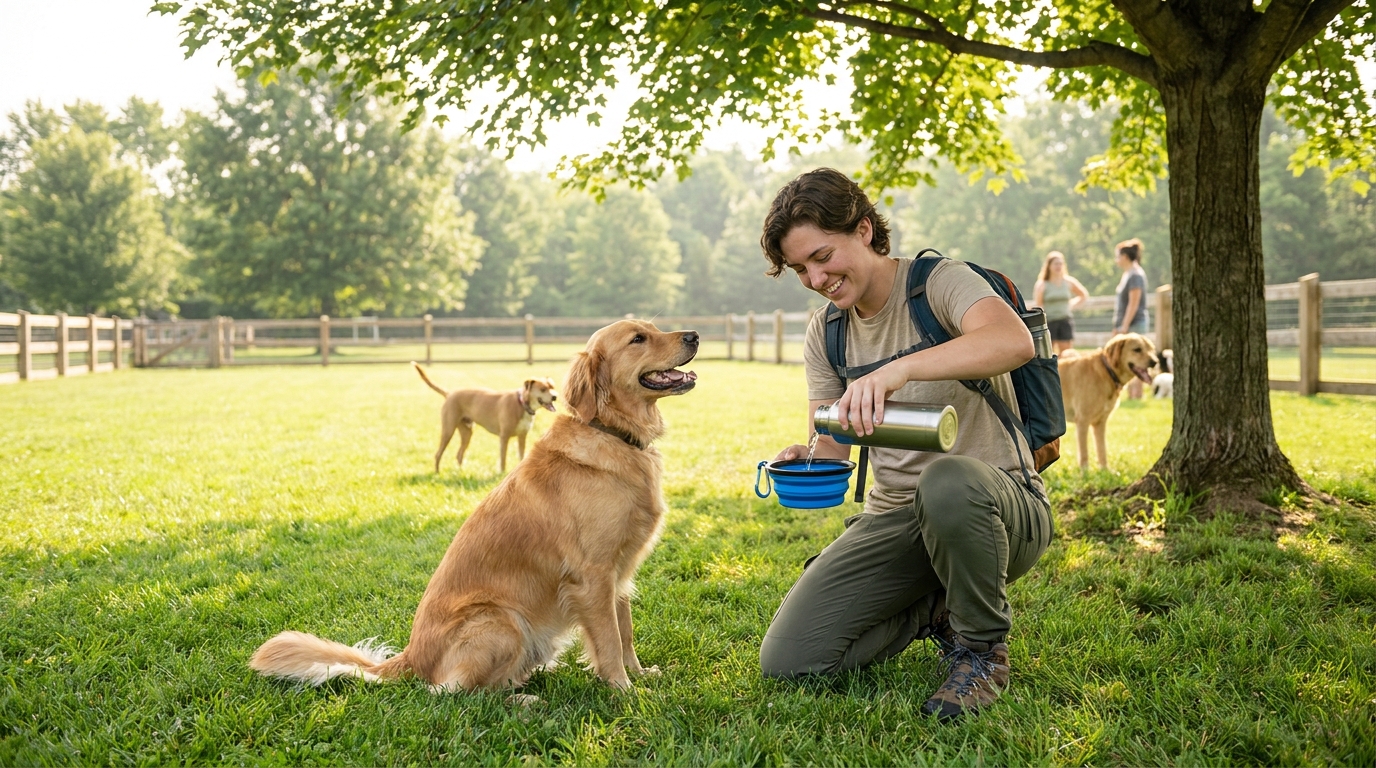
If you unexpectedly run out of water or decide to use a public bowl, inspect it before allowing your dog to drink. Avoid water that looks cloudy, dirty, slimy, stagnant, or filled with debris. Do not let your dog drink if fecal material, insects, algae, or other obvious contamination is present.
Also look at the surrounding area. A bowl placed beside overflowing garbage, dog waste, muddy standing water, or evidence of rodents deserves more caution than a clean station supplied by continuously flowing potable water.
Natural water sources require a separate level of judgment. Ponds and lakes may contain harmful algae or other contaminants that are unrelated to communal bowls. Do not assume natural water is safe just because it looks refreshing. Review our guide to blue-green algae and dogs before allowing your dog to swim in or drink from unfamiliar park water.
Another simple rule is not to encourage your dog to share a bowl simply because other dogs are using it. Popularity is not evidence of cleanliness.
When Symptoms Mean You Should Call Your Veterinarian
Drinking from a communal bowl does not automatically mean your dog will become ill, so there is generally no reason to panic after a single drink. Instead, pay attention to your dog’s normal health and behavior.
Contact your veterinarian if your dog develops concerning symptoms such as persistent diarrhea, repeated vomiting, unusual lethargy, loss of appetite, significant coughing, fever, or other sudden changes. Tell your veterinarian about recent dog park visits, exposure to shared water, contact with unfamiliar dogs, and any natural water your dog may have entered.
More serious signs such as difficulty breathing, collapse, severe weakness, repeated vomiting, significant dehydration, seizures, or another rapidly worsening condition may require urgent veterinary attention. SafeDogParks.com provides general educational information and should not replace diagnosis or treatment from a veterinarian.
Shared dog
Shared dog park water bowls are convenient, but convenience does not necessarily make them the best choice. Public bowls can potentially become contaminated through saliva, dirty paws, fecal material, standing water, wildlife, and repeated use by unfamiliar dogs.
The easiest precaution is also one of the simplest: bring fresh water and your dog’s own clean bowl. Combine that habit with active supervision, good sanitation, heat awareness, and thoughtful park selection. Use our Find a Dog Park resource to think about park amenities and the Dog Park Safety Guide to build a complete pre-visit routine.
A safer dog park visit is rarely about one dramatic rule. It comes from small, repeatable decisions—including knowing exactly where your dog’s drinking water came from.